
Generative Design Skateboard Truck
Project Overview
This project explores the use of generative design to develop a lightweight skateboard truck hanger with an integrated motor mount for an electric longboard. The goal was to consolidate multiple functional components into a single, optimized structure capable of withstanding realistic loads while minimizing mass.
Unlike traditional CAD workflows, generative design produces geometry based on constraints, loads, and material properties. This makes it particularly effective for components like a truck hanger, where complex load paths and multiple functional requirements intersect.
Background
The skateboard truck hanger is the primary structural element connecting the wheels to the board. It transmits forces from the rider during riding, turning, and braking, while rotating about the kingpin through compressible bushings to enable steering.
In a conventional setup:
- The hanger is typically cast aluminum
- The axle is a press-fit steel rod
- The motor mount is a separate attachment
In this project, the hanger and motor mount were combined into a single generatively designed component, improving load transfer and reducing part count.
Design Objectives
- Minimize mass while maintaining structural integrity
- Maintain a minimum safety factor of 2
- Integrate the motor mount into the hanger
- Preserve all critical functional interfaces
- Ensure compatibility with the pulley system and assembly constraints
The study used an unrestricted manufacturing setting to allow maximum geometric freedom.
CAD Setup
A CAD model of the longboard assembly was utilized to define key interfaces and constraints. The generative design workflow required separating geometry into:
Preserve Geometry
- Axle ends
- Pivot interface
- Motor mounting holes and shaft clearance
- Functional kingpin cutout
Obstacle Geometry
- Motor and pulley clearance
- Tool access regions
- Assembly motion paths
Maintaining these geometries ensured the final design remained functional after optimization.
Generative Design Inputs
Constraints
- The kingpin region was treated as a fixed support
- The axle ends, motor mount, and pivot were allowed to respond to loads
Load Cases
Applying appropriate load cases is important in generative design because the resulting geometry is entirely driven by the forces and constraints applied. If key loads are missing or unrealistic, the design may perform well in simulation but fail under real-world conditions. For this project, the load cases were chosen to represent the primary forces experienced during riding, including vertical rider weight, lateral turning forces, motor torque, braking, and impact from a curb strike.
The forces were estimated using reasonable assumptions based on rider weight, expected usage, and simplified physical models. This process could be improved by incorporating experimental data, dynamic simulations, or more detailed, multi-axis loading conditions. Overall, accurate load definition is necessary because generative design solutions are only as strong as the assumptions used to create them.
| Force Name | Magnitude | Location Applied | Rationale |
|---|---|---|---|
| Rider Weight | 800 N | Axle | Represents vertical load from rider |
| Motor Weight | 9.61 N | Motor Mount | Represents vertical load from motor |
| Motor Torque | 8000 N-mm | Motor Mount | Simulates propulsion through belt drive |
| Lateral Load | 600 N | Axle | Represents turning forces |
| Braking Force | 600 N | Axle | Represents deceleration forces during braking |
| Curb Strike Force | 2000 N | Axle | Simulates impact from a curb collision |
Each load case was designed to reflect a realistic riding condition.
Materials
Two materials were evaluated for this study:
AlSi10Mg Aluminum
- Lightweight
- Comparable to conventional truck materials
- Produces thicker structures
17-4 PH Stainless Steel
- Higher strength and stiffness
- Higher density
- Produces thinner structures
Material properties significantly influence generative outcomes.
Generative Design Results
Aluminum Outcome
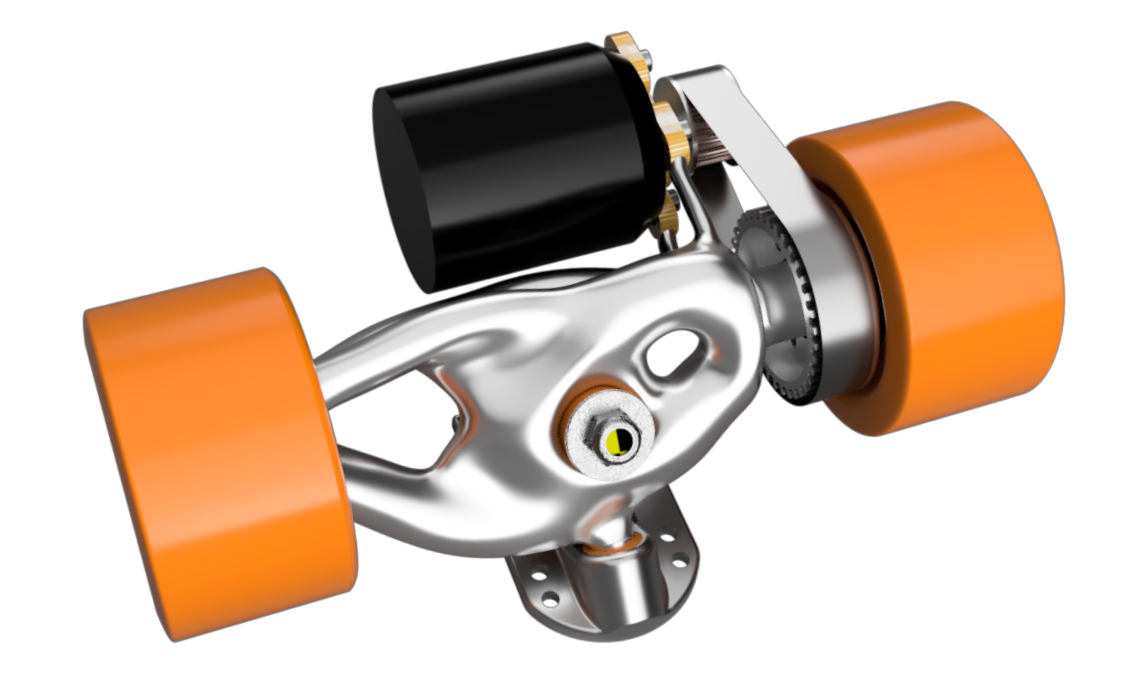
The aluminum solution produced a more robust structure to compensate for lower material strength.
Steel Outcome
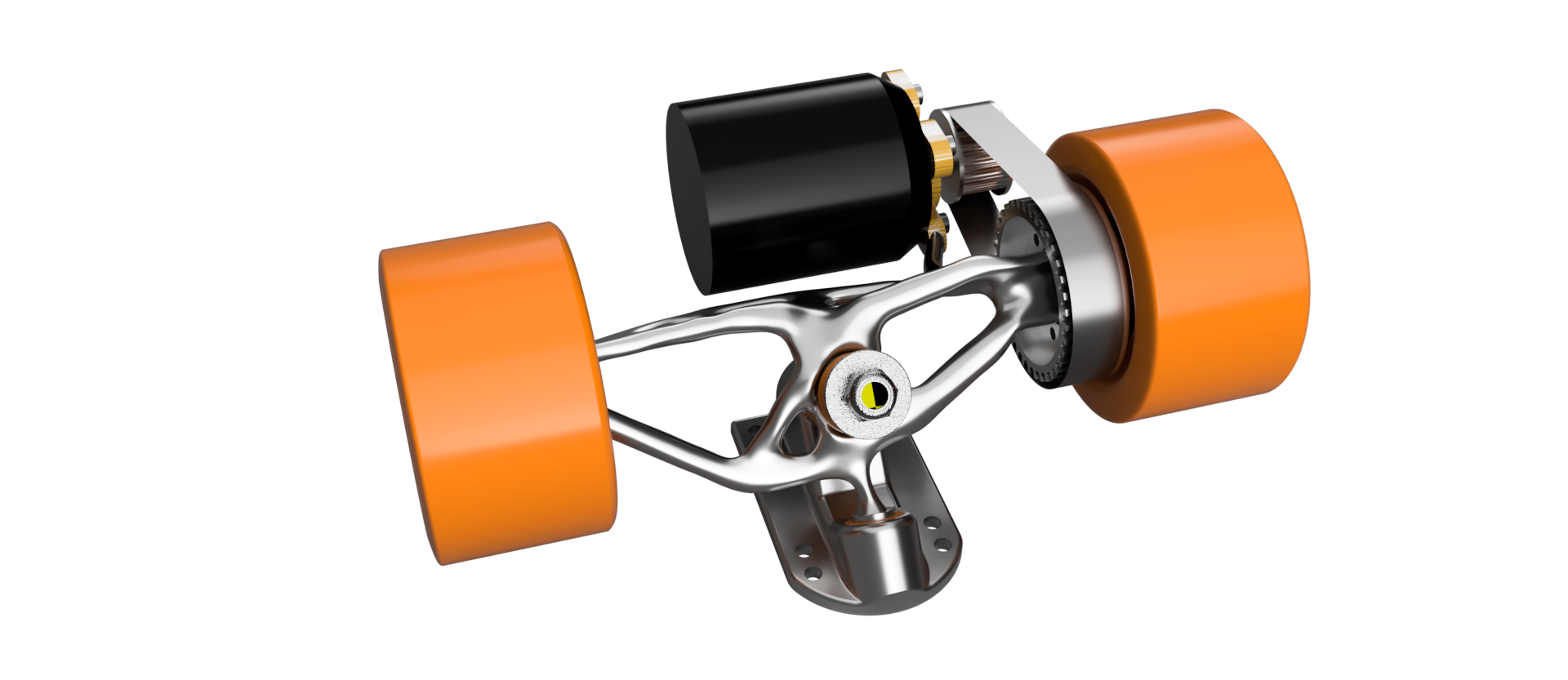
The steel solution resulted in a thinner geometry with less overall volume due to higher material strength.
Fabrication
The truck hanger was originally intended to be fabricated using nylon powder bed fusion (pSLS) due to its ability to produce complex geometries without support structures and with isotropic mechanical properties. This process is particularly well-suited for generative design because it:
- Eliminates the need for support structures
- Produces uniform strength in all directions
- Accurately captures complex internal geometries
However, due to equipment constraints, the prototype was instead fabricated using PLA filament (FFF) on a Bambu H2C printer.
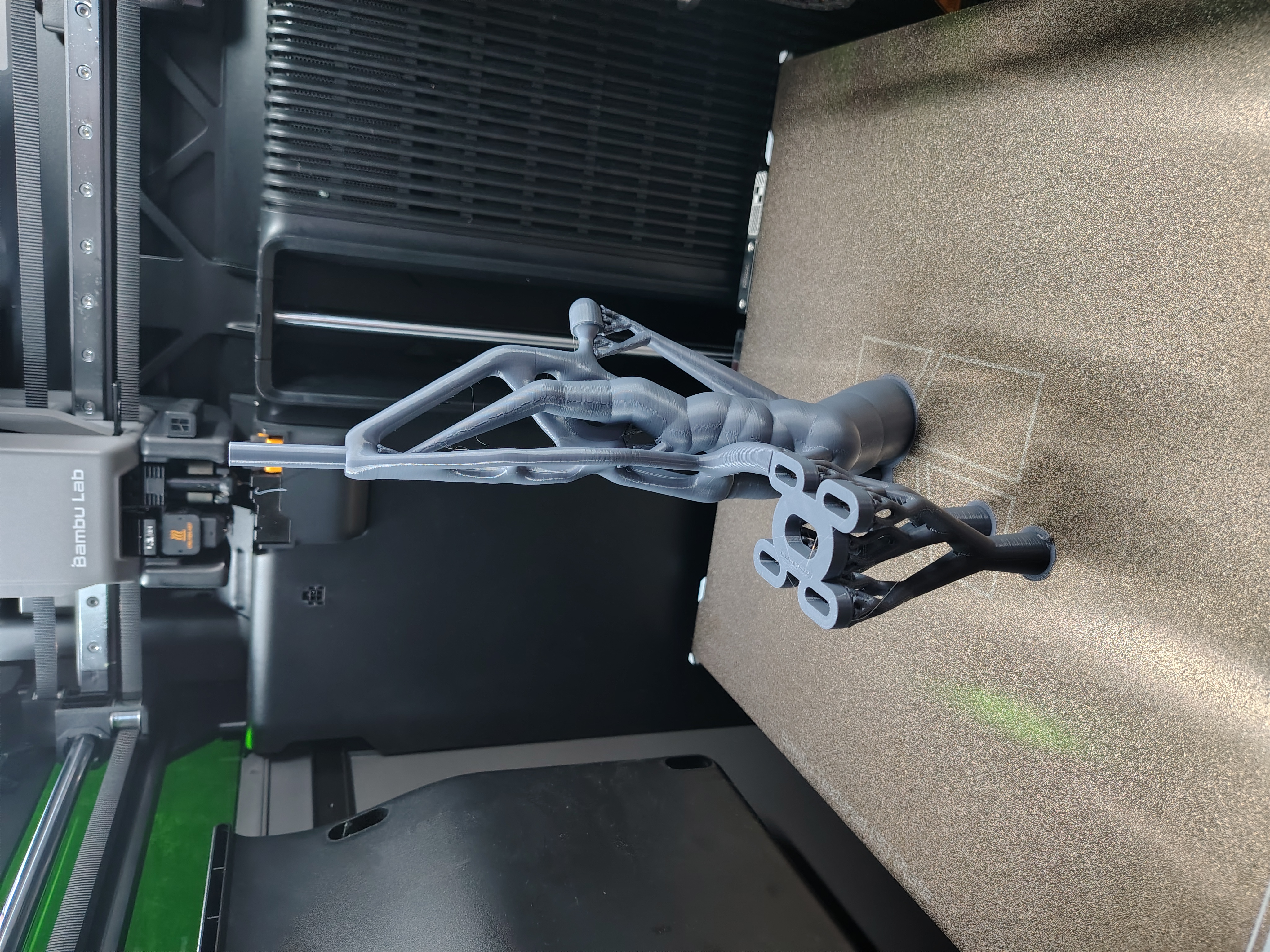
This introduced several limitations:
- Required support structures
- Anisotropic strength
- Reduced dimensional accuracy for fine features
Assembly and Testing
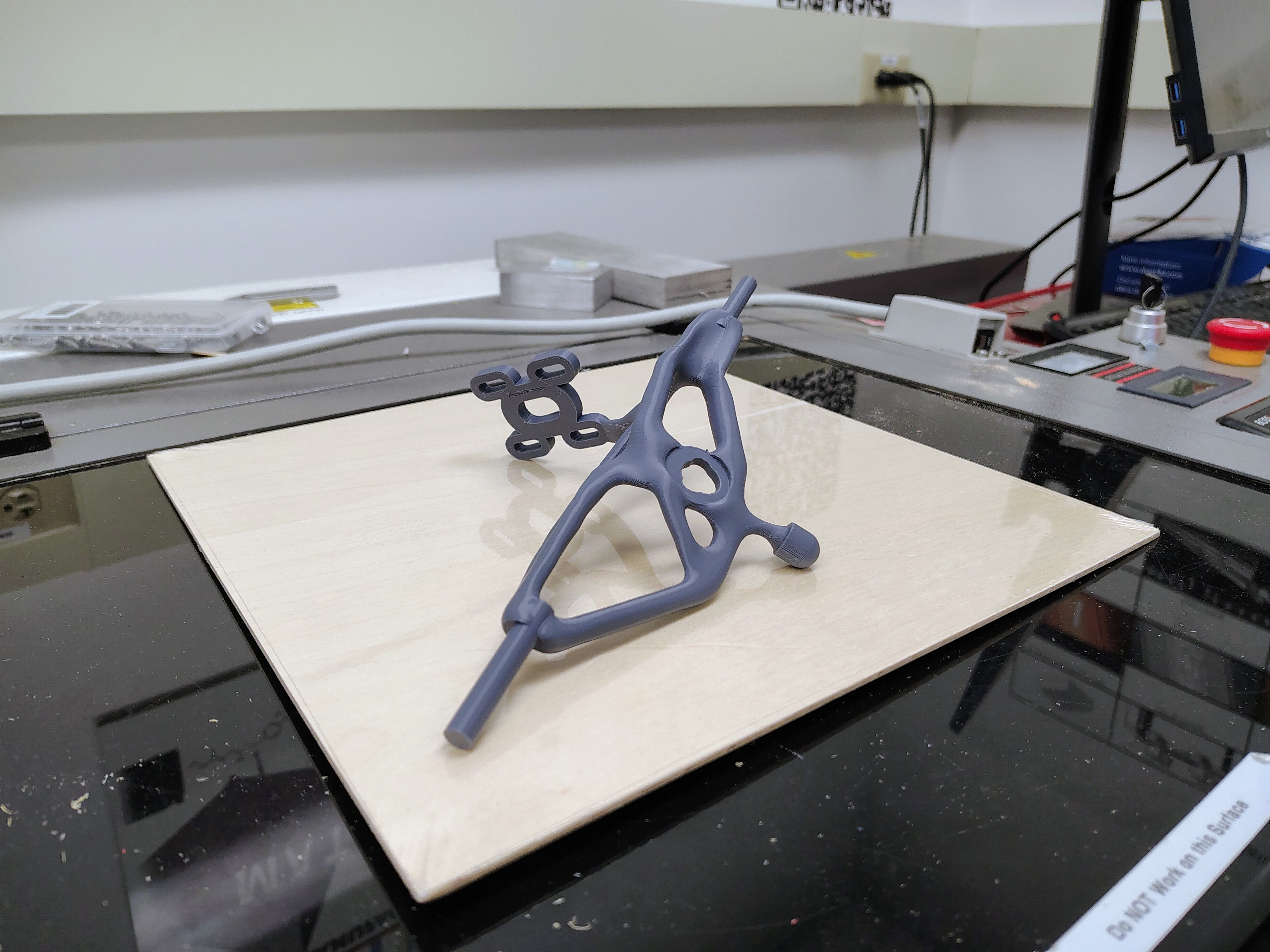
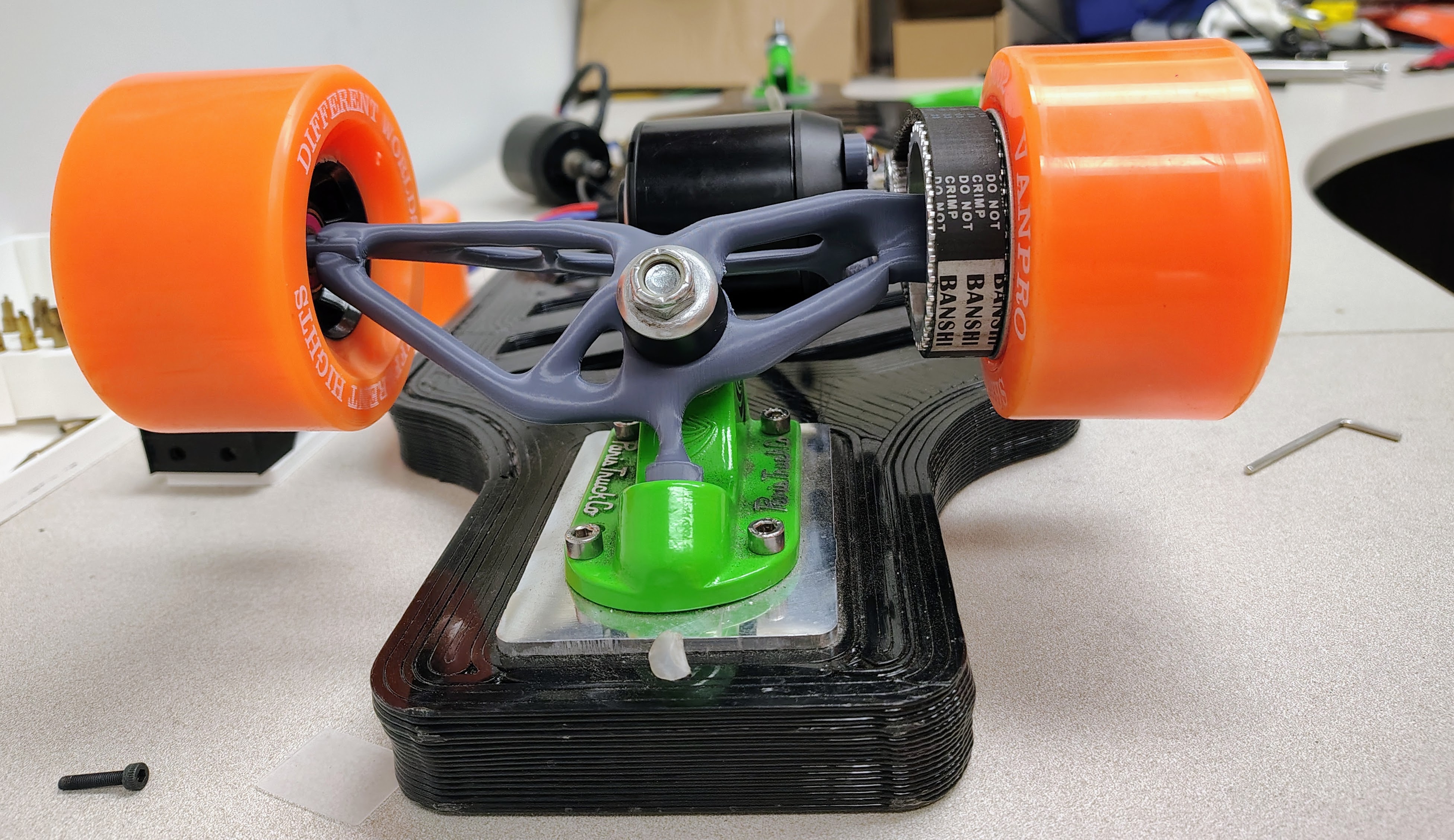
The printed hanger was assembled into the longboard system to verify the fit of the pivot and kingpin region, motor mount alignment, and clearance for the pulley and belt components.
Motion Validation
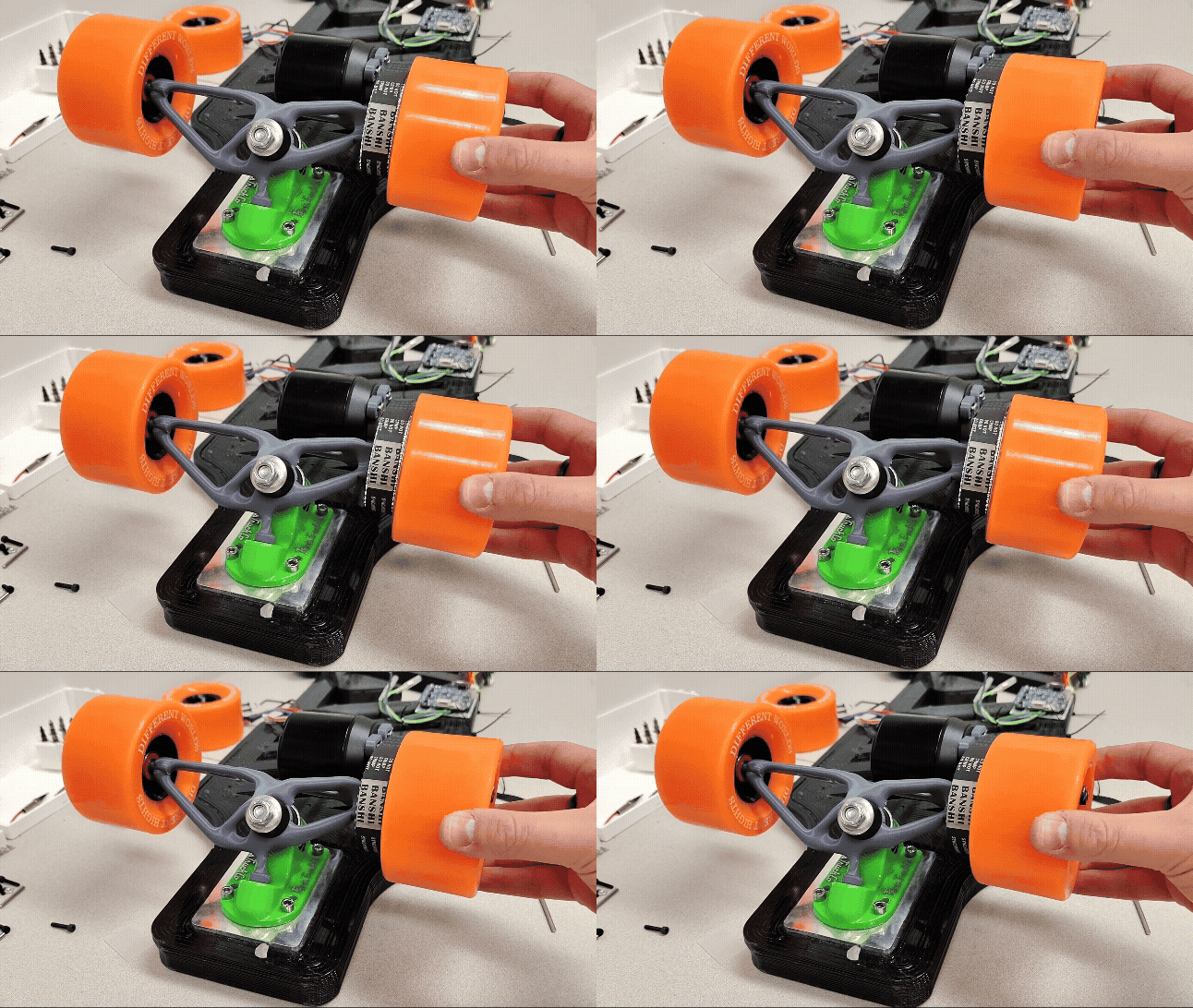
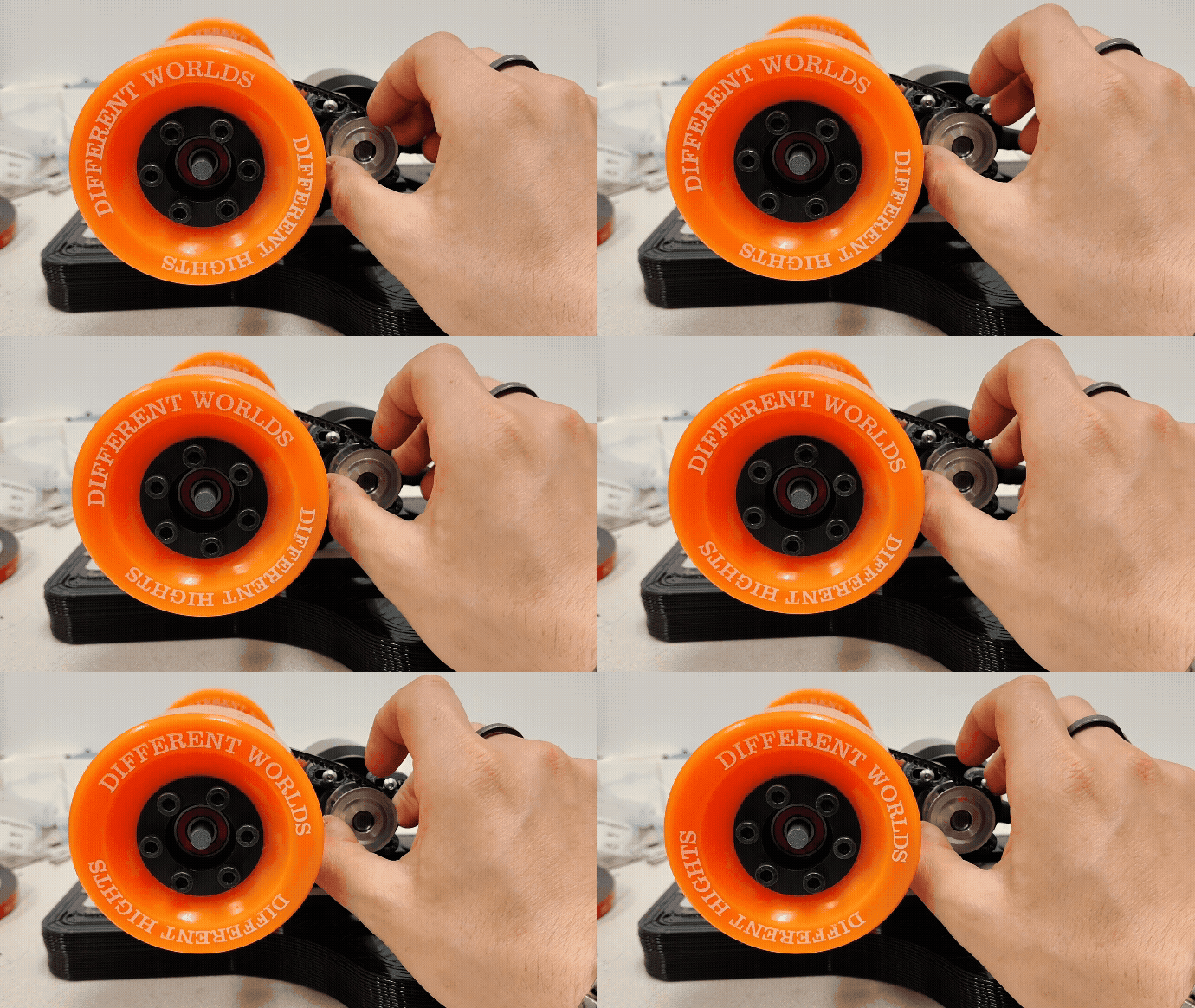
Testing confirmed that the part allowed for adequate turning clearance and functional motor and belt rotation with no major interference issues.
Discussion
This project demonstrates how generative design can produce components that outperform traditional designs in terms of weight and structural efficiency.
Key Takeaways
- Load definition is critical
- Material selection strongly influences geometry
- Manufacturing method affects feasibility and performance
Generative Design + Powder Bed Fusion
The combination of generative design and powder bed fusion is especially powerful in industries such as aerospace and automotive, where:
- Weight reduction is critical
- Complex geometries are acceptable
- Part consolidation reduces assembly complexity
In aerospace applications, this pairing is especially valuable due to rigid requirements for weight reduction and performance efficiency. A well-known example is Airbus’ use of generative design to create lightweight “bionic partition” structures, which significantly reduces aircraft mass while maintaining strength. This design directly improves fuel efficiency and reduces emissions. More broadly, GD + PBF has been used to consolidate multi-part assemblies into single components, simplifying assembly and improving reliability.
In the automotive industry, similar benefits are targeted in components like suspension parts and motor mounts, where reducing unsprung mass or improving stiffness-to-weight ratio can enhance vehicle performance. Generative design enables engineers to tailor material distribution to match expected loads, and powder bed fusion makes it possible to manufacture these optimized forms without redesigning them for manufacturability. This is particularly useful in high-performance or low-volume applications, such as motorsports or electric vehicles.
Limitations
- Requires careful setup and validation
- Results can be difficult to manufacture using traditional methods
- Interpretation of organic geometry can be non-intuitive
- Highly dependent on accurate load cases
Conclusion
Generative design is a powerful tool for producing efficient, lightweight structures in applications where performance and weight are important. However, its usefulness is limited by the accuracy of input assumptions, especially load cases and constraints, meaning that poor setup can lead to impractical or infeasible designs. The resulting geometries can also be difficult to manufacture or modify, and often require advanced fabrication methods such as powder bed fusion to be viable. Additionally, computational cost can be significant. Despite these drawbacks, generative design is most valuable in industries where part consolidation, weight reduction, and optimized load paths provide clear benefits.
Although fabrication was performed using FFF due to equipment constraints, this project highlights the advantages of using powder-based additive manufacturing to fabricate complex generative geometries in real-world applications.